
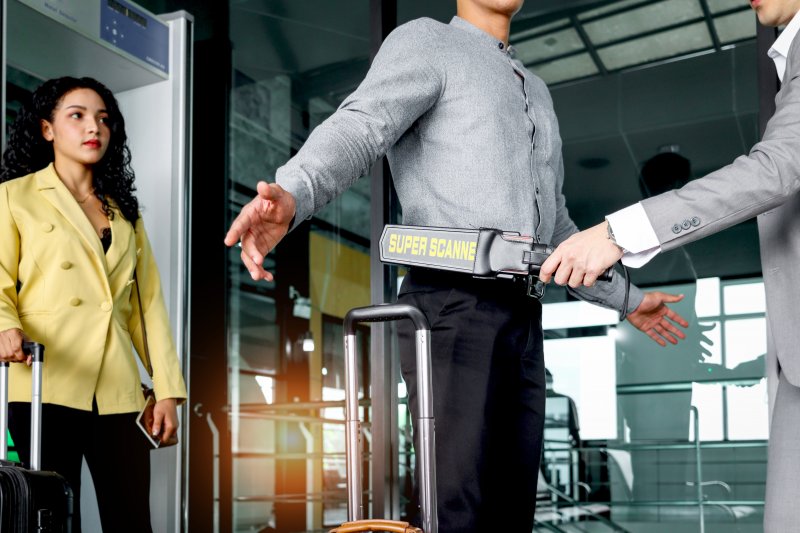
Airports are stressful enough on a good day. Between long lines, TSA regulations, flagged carry-ons, and waves of people, the last thing you need is a new source of anxiety. This is why many frequent flyers are often cautious about dental implants. If they’re made of metal, they must set off the detectors, right? Not exactly. Continue reading to learn more about dental implants and see why your new enhancements won’t hold up the line.
Why Dental Implants Don’t Trigger Metal Detectors
Modern dental implants are made from titanium, a metal that is non-ferromagnetic. That means it isn’t attracted to magnets and doesn’t behave the same way when exposed to magnetic fields as iron-based metals do.
Airport security systems, like walk-through metal detectors, are programmed to detect larger, denser, and more conductive materials. Think steel and iron, two common metals used for weapons or explosives.
Implants can be detected by scanners, but they’re small and produce a very weak signal, so they don’t trigger alarms. You’ll be able to sail through security with confidence.
What About Full-Body Scanners?
Modern full-body scanners use different methods to find objects other than magnetism. Instead, they use X-rays or millimeter-wave technology to create images and flag suspicious objects.
However, much like the walk-through detectors, they are pre-programmed to ignore things like medical devices. So, the small titanium post fused to your jawbone isn’t going to show up as a threat.
Are There Any Travel Considerations for Implant Patients?
For most patients, dental implants require no special preparation for air travel whatsoever. That said, there are a few things worth keeping in mind to make your trip more pleasant.
If you’ve had implant surgery recently, long flights and changes in air pressure can occasionally cause mild discomfort around the surgical site. That said, this is usually temporary and should resolve itself as soon as you’re at altitude or when you land.
Likewise, be careful chewing on the side of your mouth where your implants are. Biting down on something hard or crunchy while in flight could lead to an uncomfortable situation with few solutions in the moment.
Finally, be sure to stay hydrated. Airplane cabins can have very dry air, and without adequate saliva, your implant site is unprotected.
Dental implants are one of the most travel-friendly tooth replacement options available. They require no special case, no removal, no documentation, and no explanation at the security line. Still have concerns? Talk to your dentist and make a plan to sail the skies in confidence.
About the Author
Dr. Sai N. Kham is a passionate dentist with a doctorate from the University of Pennsylvania School of Dental Medicine. Afterward, he completed his residency at Columbia University Irving Medical Center and Einstein Hospital Medical Center. Today, Dr. Kham has over 20 years of experience helping patients achieve beautiful, secure smiles. Call (202) 677-0456 to schedule a dental implant consultation at Washington DC Dentistry or visit our website to see a full menu of other services.